2024
Improving the Support Experience & Content Creation
A framework for clarity, consistency, and scannability
Project overview
Why we did this
Self-help content was inconsistent and difficult to scan
Customers struggled to find quick, reliable answers
The work done
Analysis of existing support articles and patterns
Created content templates and guidelines to be applied throughout all support articles
How this helps customers
Faster, clearer answers
Consistent look and feel across support articles
Less effort to navigate and understand information
How this helps the business
More effective self-service
Reduced call/chat volume to support centre
Streamlined operations with content writers using templates
Performance outcome
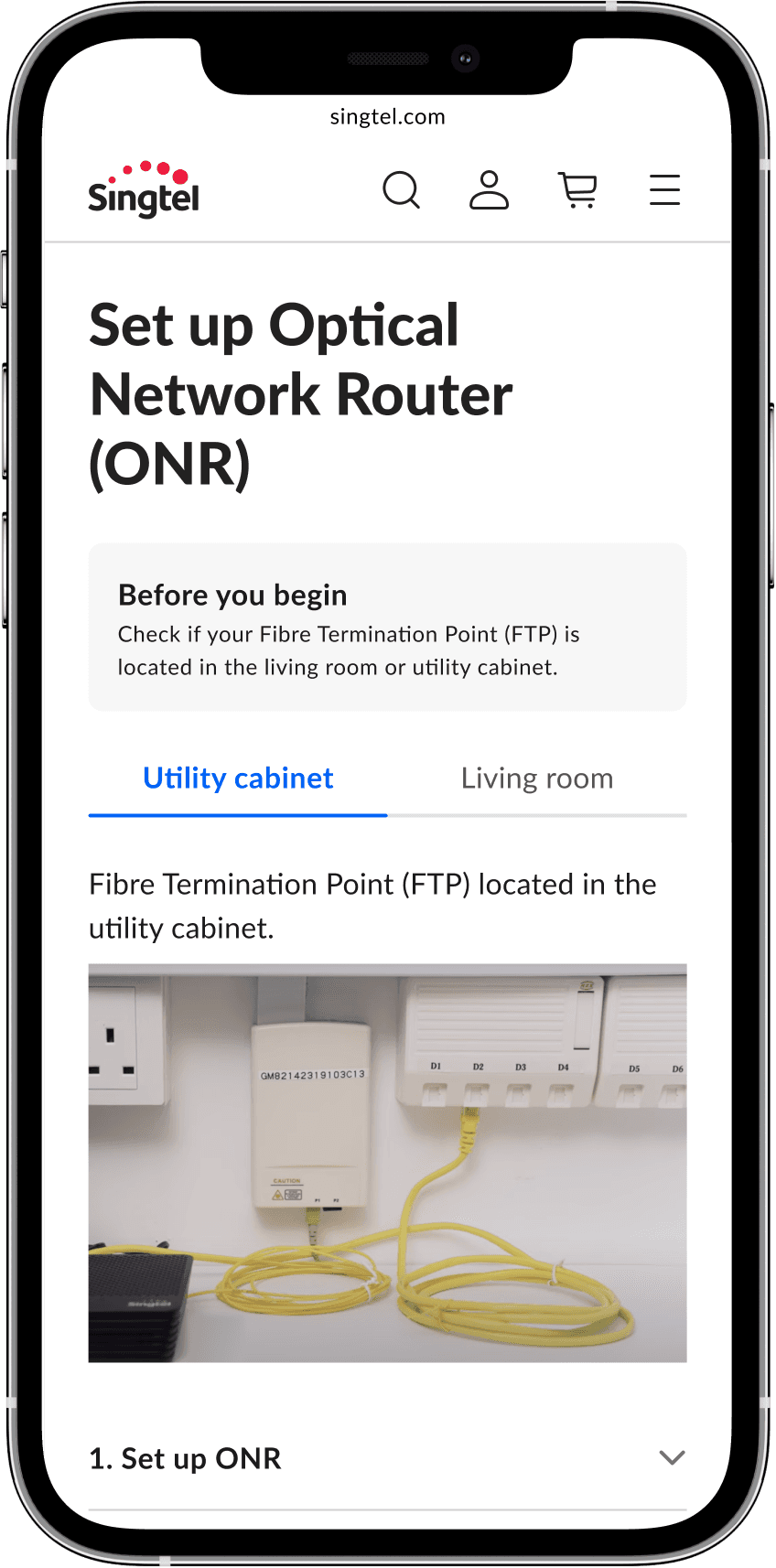
A highly-visited support article applied with the content framework resulted in the following:
Since the launch in September 2024, infancy calls to our call centre were 33% lower by December 2024.
Truckrolls also decreased from about 110 to 90 per month.
Infancy calls: Customers who call within 7 days upon self-collection.
Truckrolls: A physical visit to a customer by a technician.
Who reads this article?
Customers who have just physically collected their new broadband equipment from a store.
How do they get to this page?
They receive an SMS that links them to the article. This page receives about 2,300 visits a month.
Why does this page work better?
Upon first view, the content is more clearly grouped
Content is structured to guide readers step-by-step
Instructions are more succinct for each step
Images were improved to visualise each step
The Support Content Framework
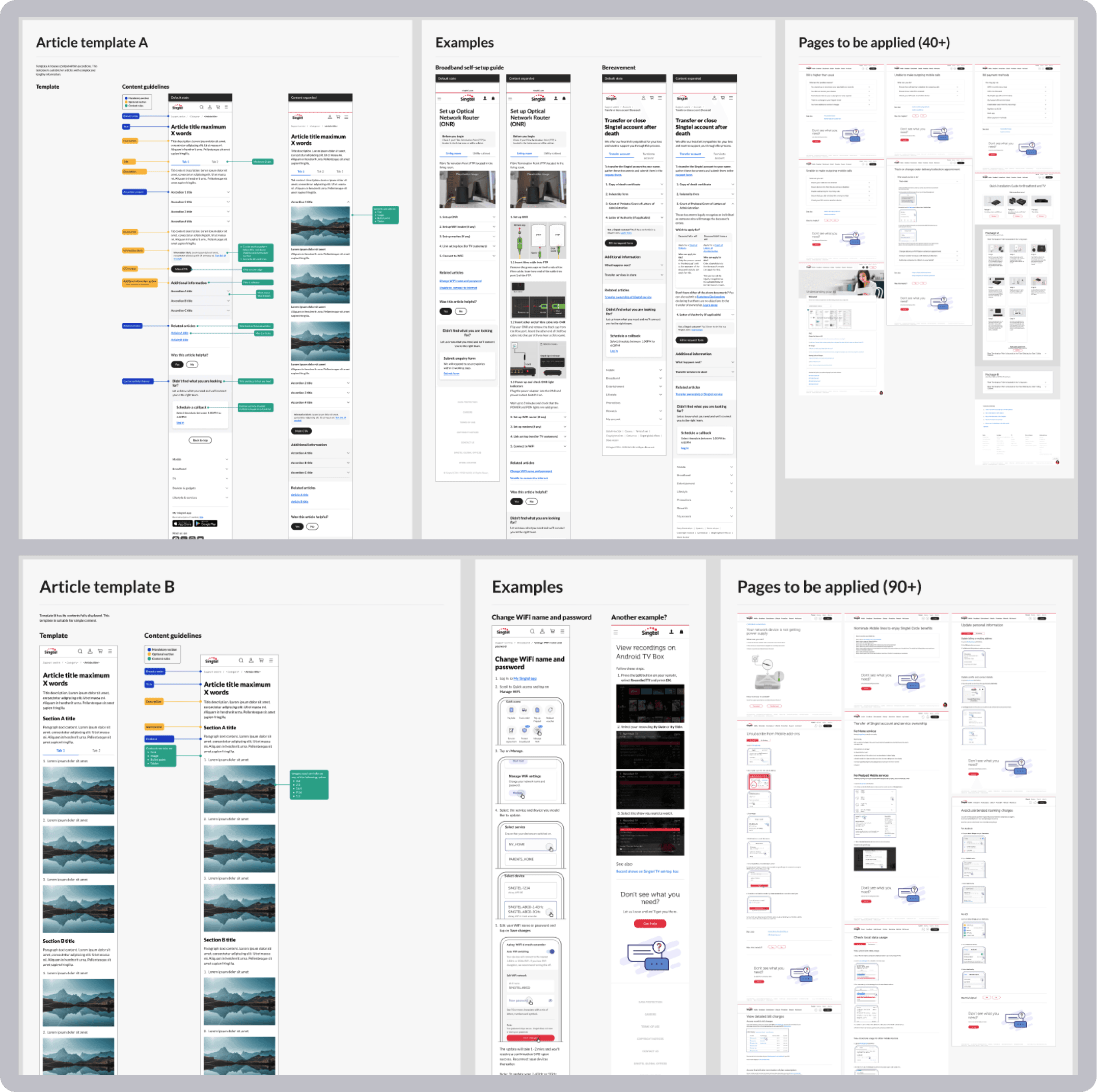
Page templates
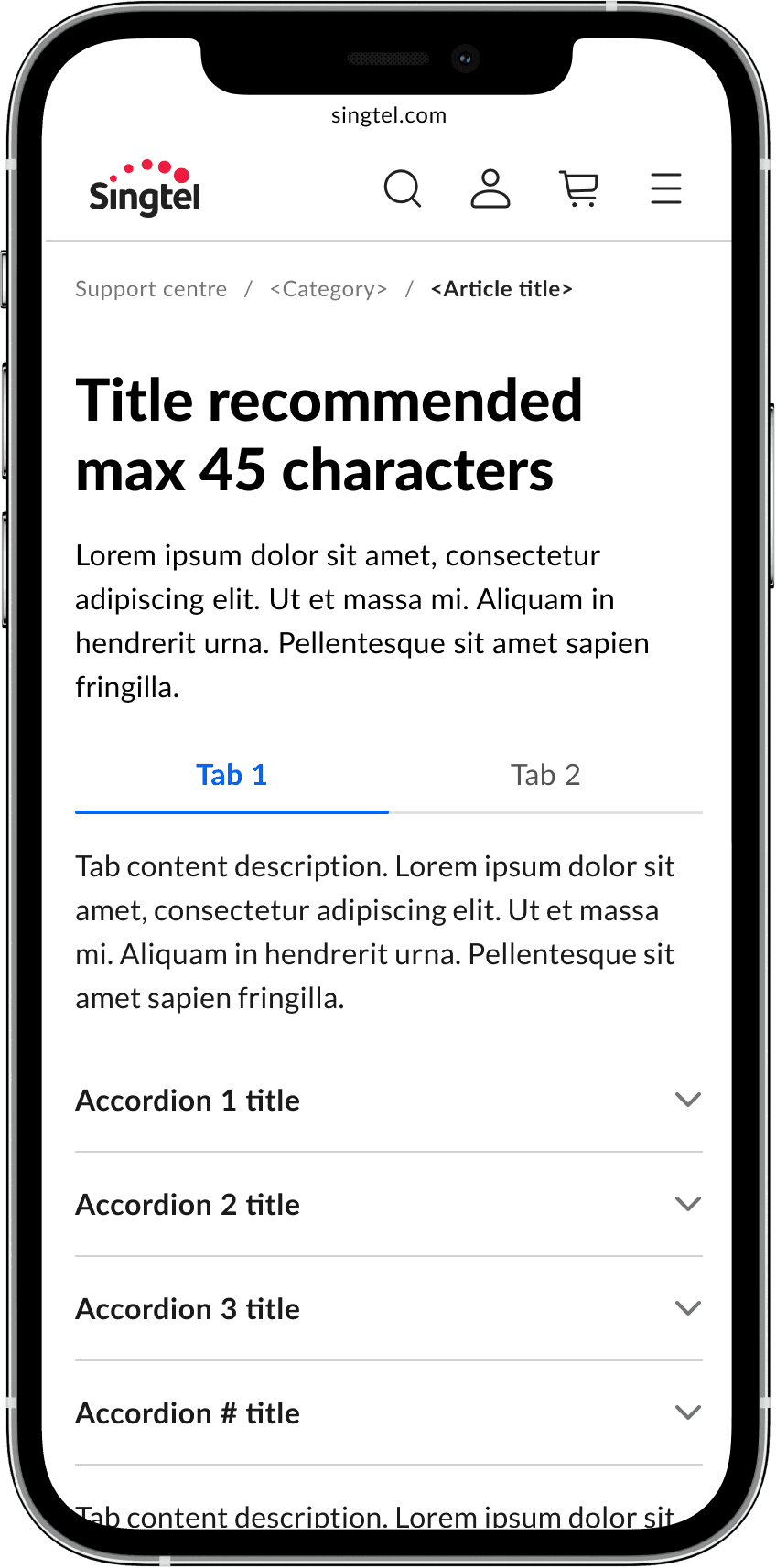
Template A
Articles with complex and lengthy information. For example, setting up of broadband equipment or transfer of an account.
Applied to 40+ pages.
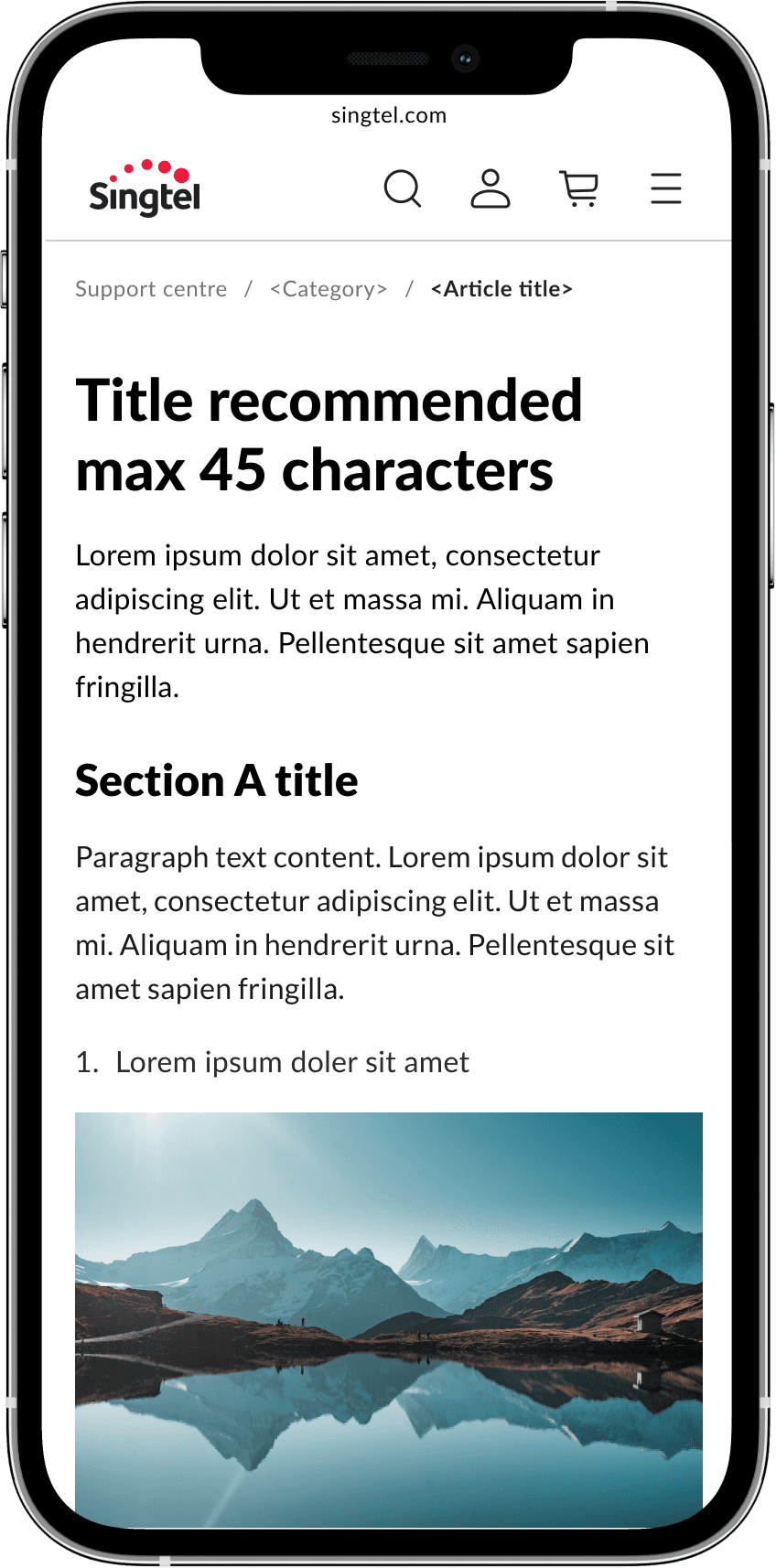
Template B
Articles with simple content. For example, viewing your bill or changing your WiFi password.
Applied to 90+ pages.
Template content guidelines
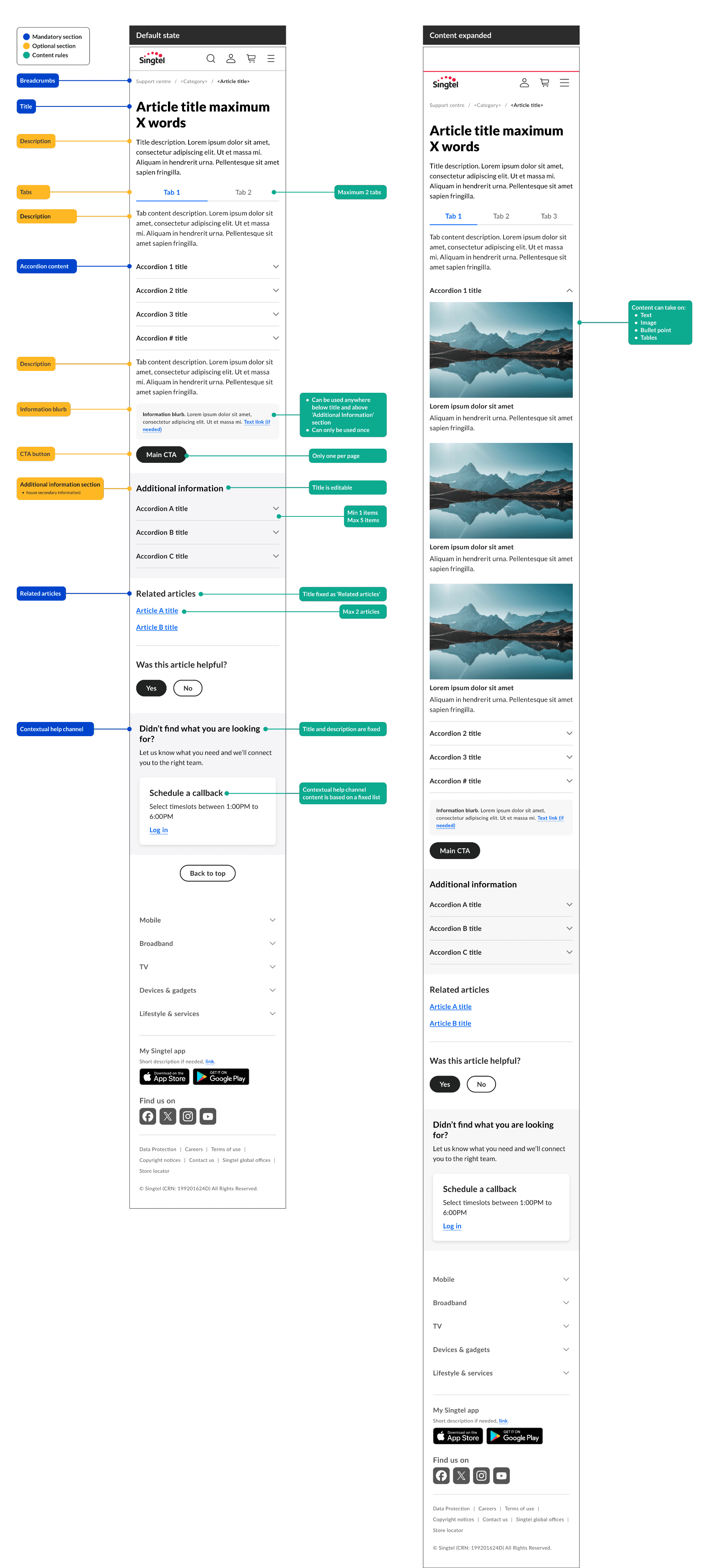
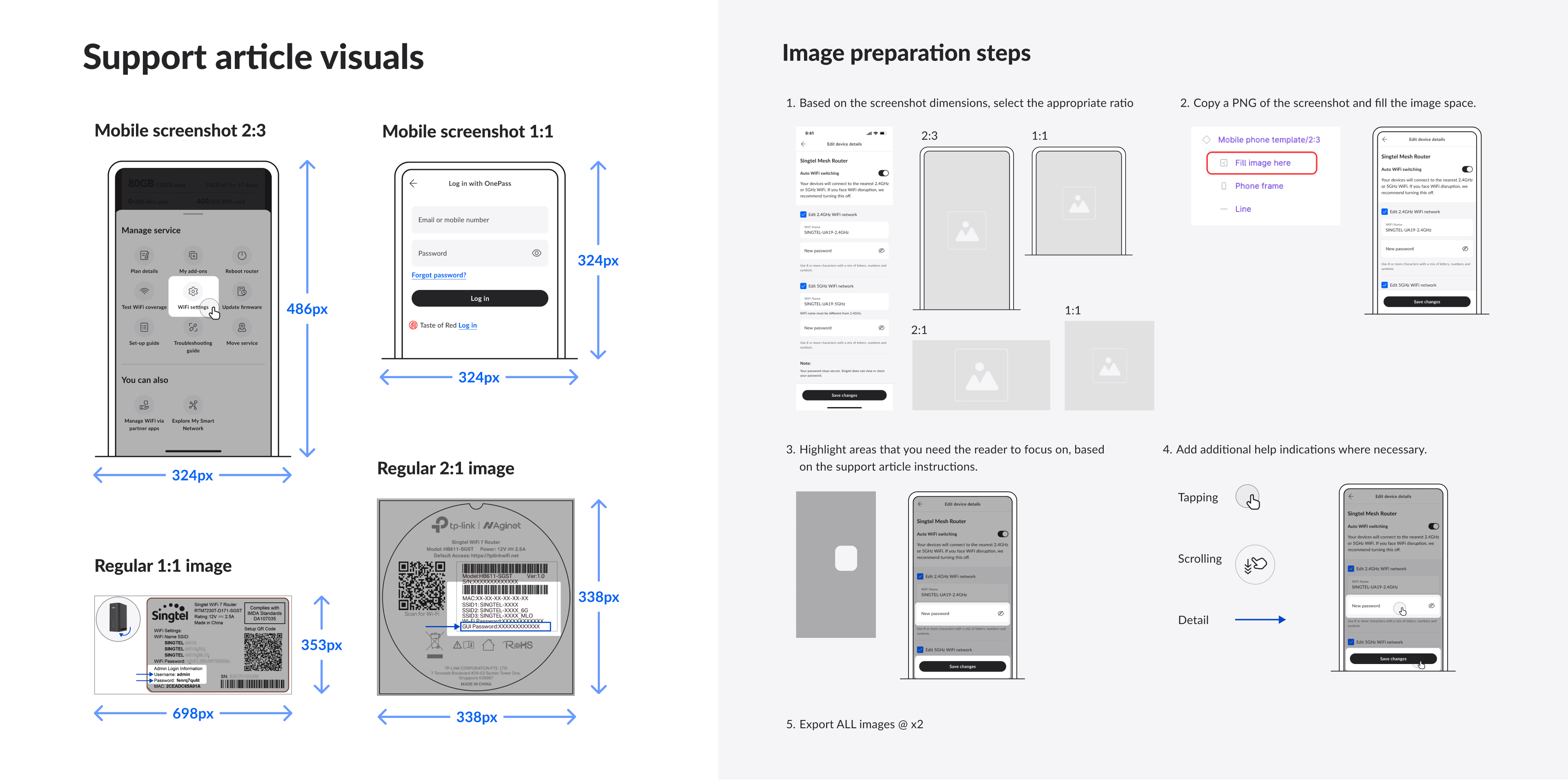
Image creation guidelines
The process
The project group consisted of myself, our content designers, UX researchers and representatives from the customer care team.
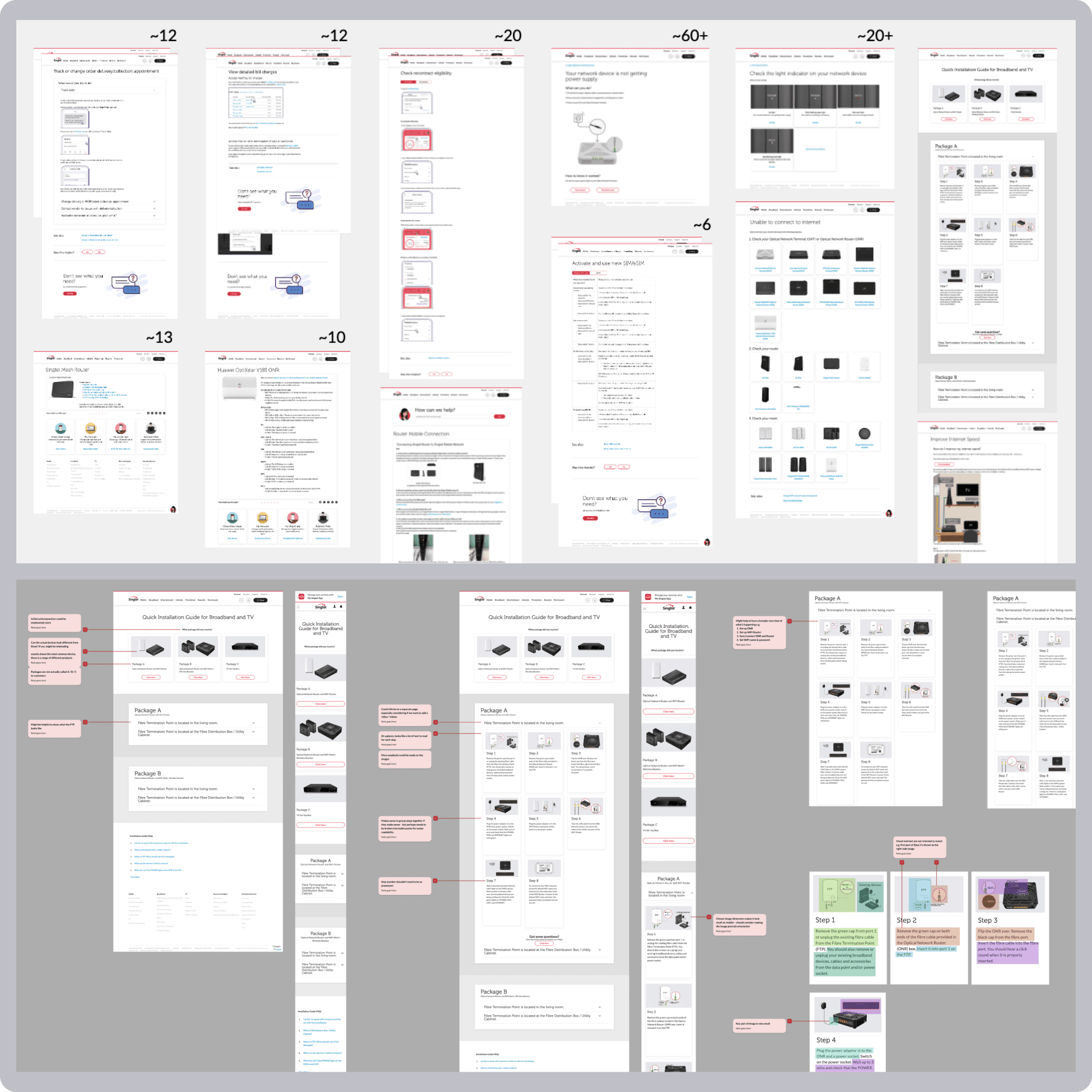
Reviewed 100+ articles across support categories and simultaneously working on a few individual support pages.
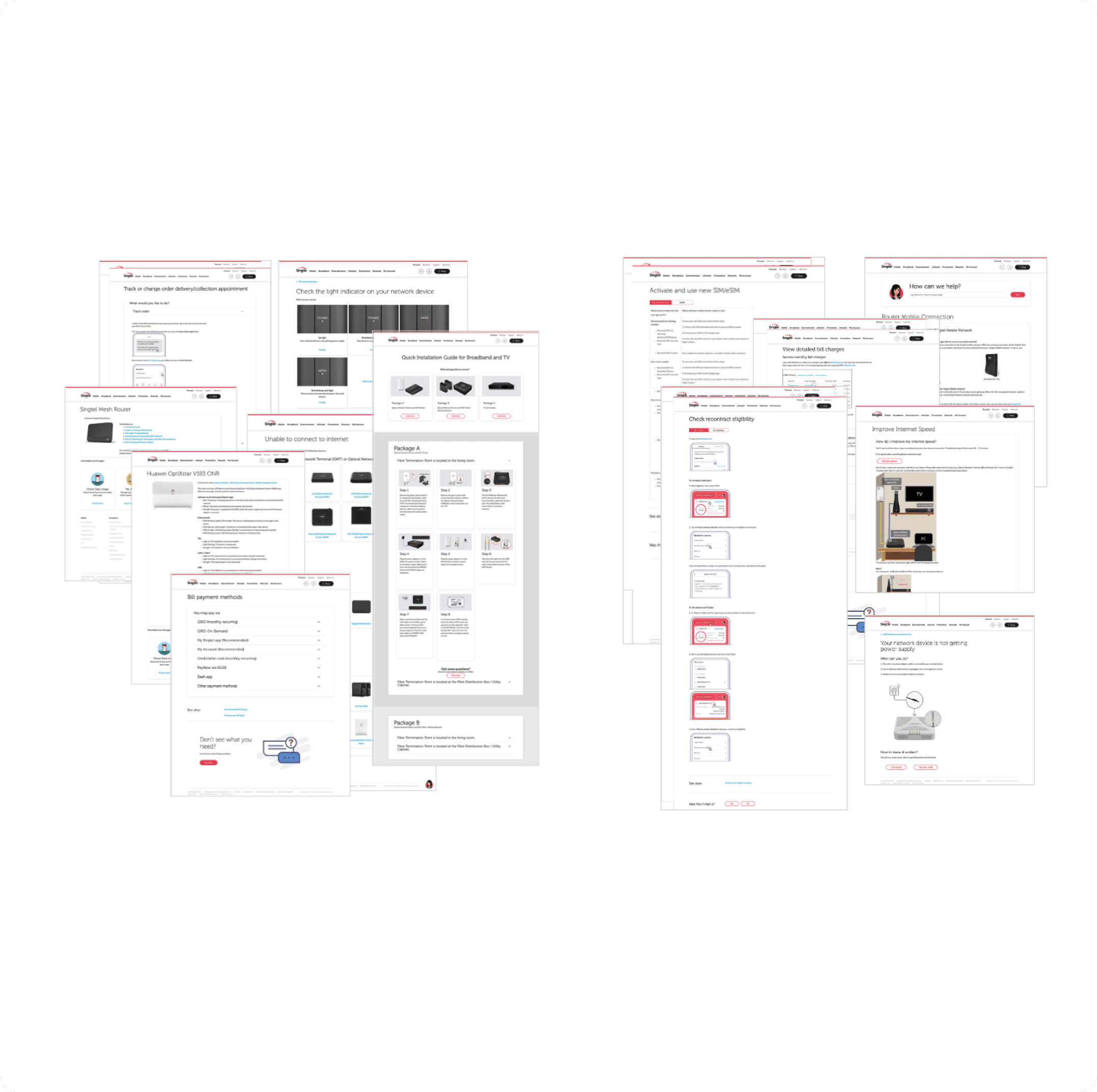
Grouped content into two major buckets: Complex and simple
Refined content structure for both templates and established usage guidelines
My learnings
Simple processes are key to operational work
This portfolio changes hands often. Having each task structured into a few clear steps makes handovers and workload sharing much easier.
From a design perspective, I took this chance to tidy up frames, layers, and components — making pages and images easier to edit and maintain.
Support articles truly are an impactful touch point
I did not realise the high volume of traffic that our support articles receive in general.
It was heartening to see the direct impact of how a more thoughtfully-structured support article could reduce call-ins significantly. This highlights the importance of ensuring quality self-support content throughout the customer journey.