Sheng Juen
User Experience Designer
I’ve come to learn that my preferred way of working is to view every problem as a blank slate, to understand the team I’m working with, and exploring what questions will reveal clarity in piecing together a solution.
While my processes aren’t fixed, there are a few approaches I carry across my work.
Asking questions anytime, every time
I try to spend real time understanding who I'm designing for, what constraints exist, and what success actually looks like. While especially important at the start of a project big or small, I continually reduce assumptions, even supposedly “answered” questions that sometimes change as a project progresses.
How this looks in practice: Questioning briefs, stakeholder discussions, reviewing existing research, auditing what's already live, and exploring different approaches to a problem.
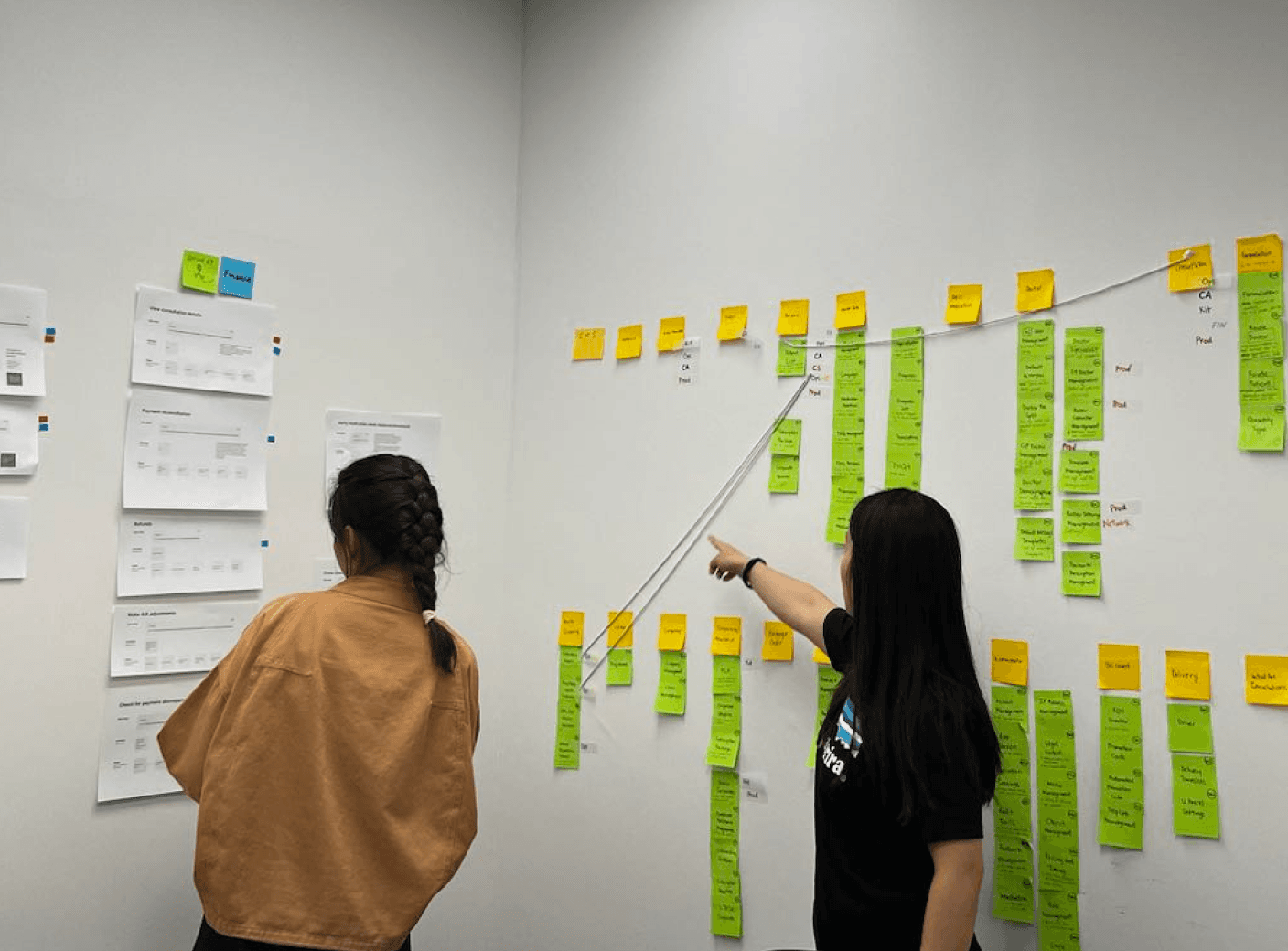
Discussing flows and information architecture for the internal CMS at WhiteCoat.
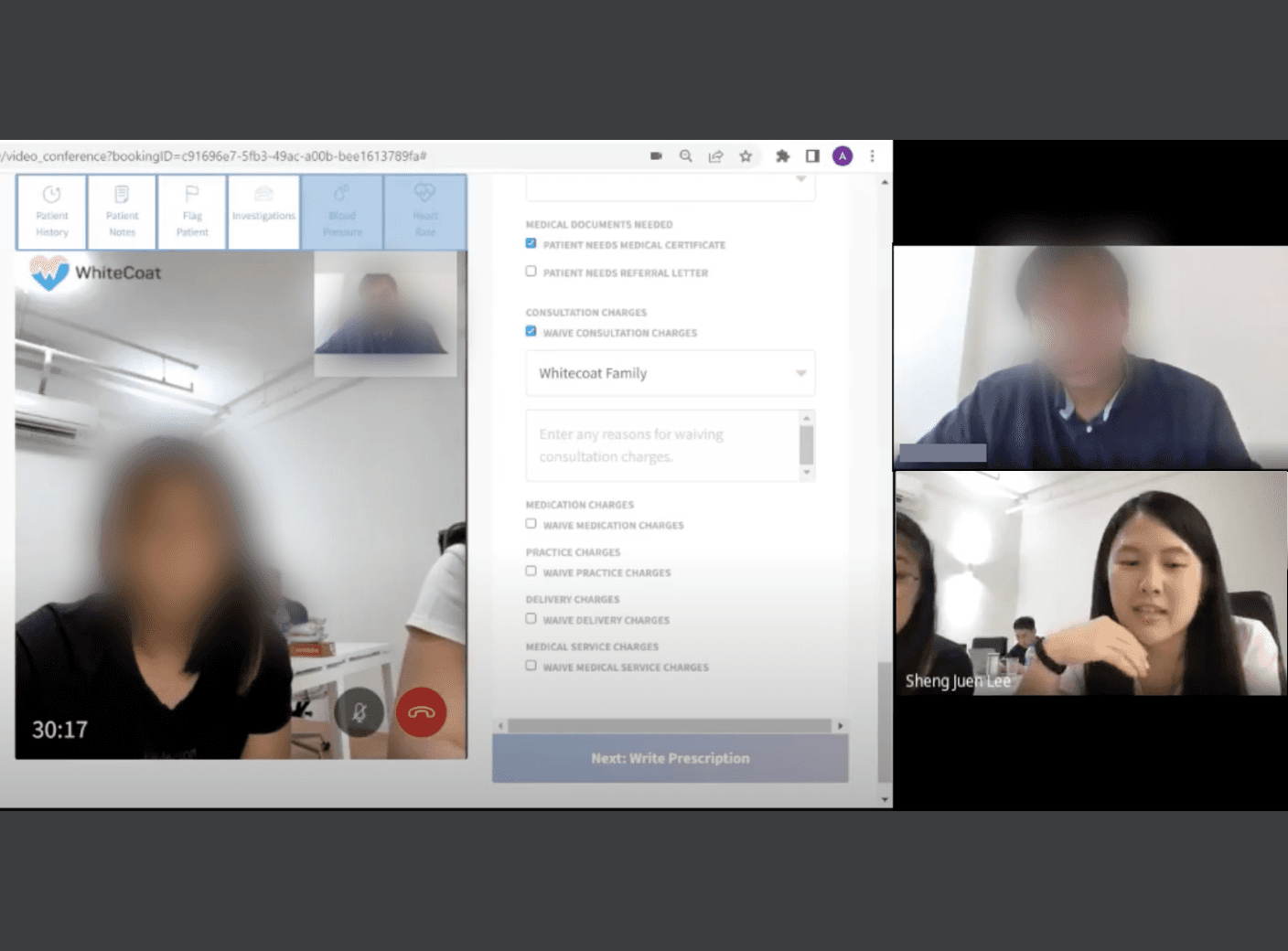
Conducting contextual inquiry via video call for the Doctors Dashboard.
Considering all systems that affects design
Whether I'm working on a design library, a web template system, or a single user journey, I design while taking into account adjacent systems, existing designs, technical constraints, or operational impact.
How this looks in practice: Design critique sessions, workshops, usability testing, development feasibility conversations, and getting the right people in the room.
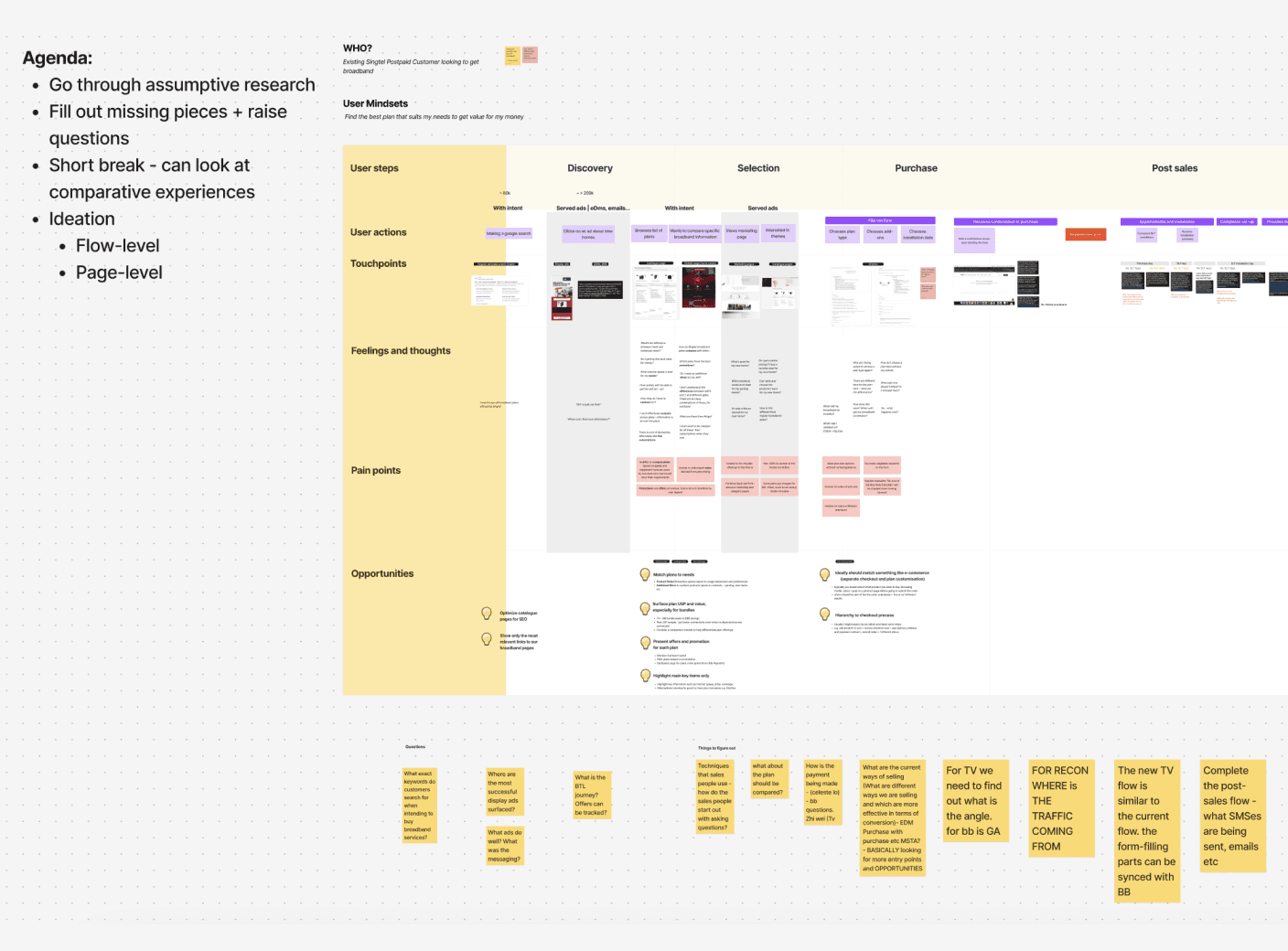
Mapping out the existing flow of the old broadband purchase journey to figure out experience gaps, system dependencies, and operational contact points.
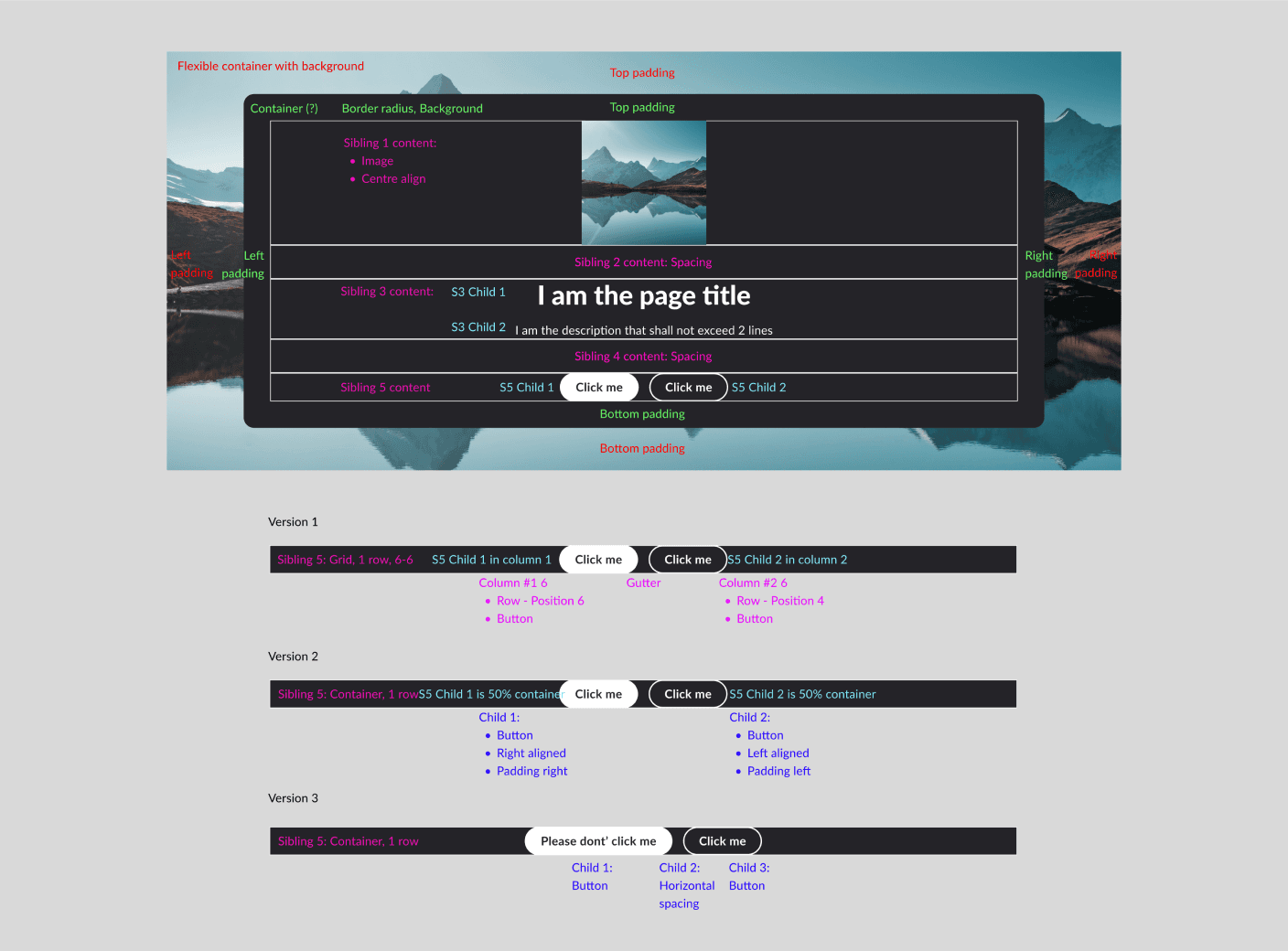
Discussing the technical build of a grid system with a product owner and developer, as part of ongoing efforts to improve our web design system.
Knowing when to speed up or slow down my workflow
AI has genuinely changed parts of how I work. I use it to generate and pressure-test copy, to explore ideas before committing to a direction, to quickly gather and sense-check secondary information, and occasionally to prototype interactions faster than I could manually.
What it hasn't replaced is judgement. Slowing down to know which problem to solve, how to align stakeholders, and what design decisions make sense given the full context.
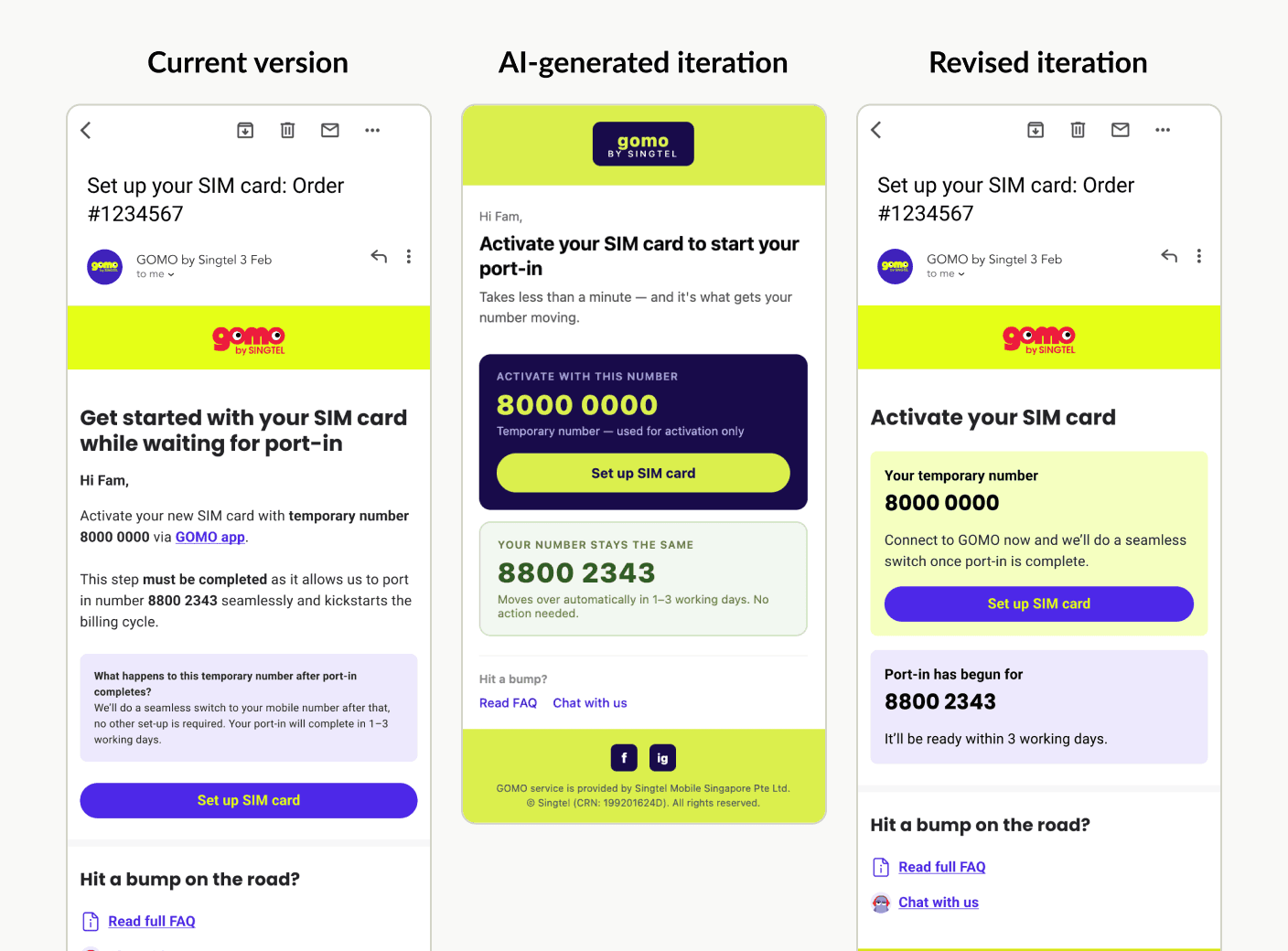
Using Claude for one of many micro-improvement tasks: Creating a first draft with Claude and iterating thereafter.
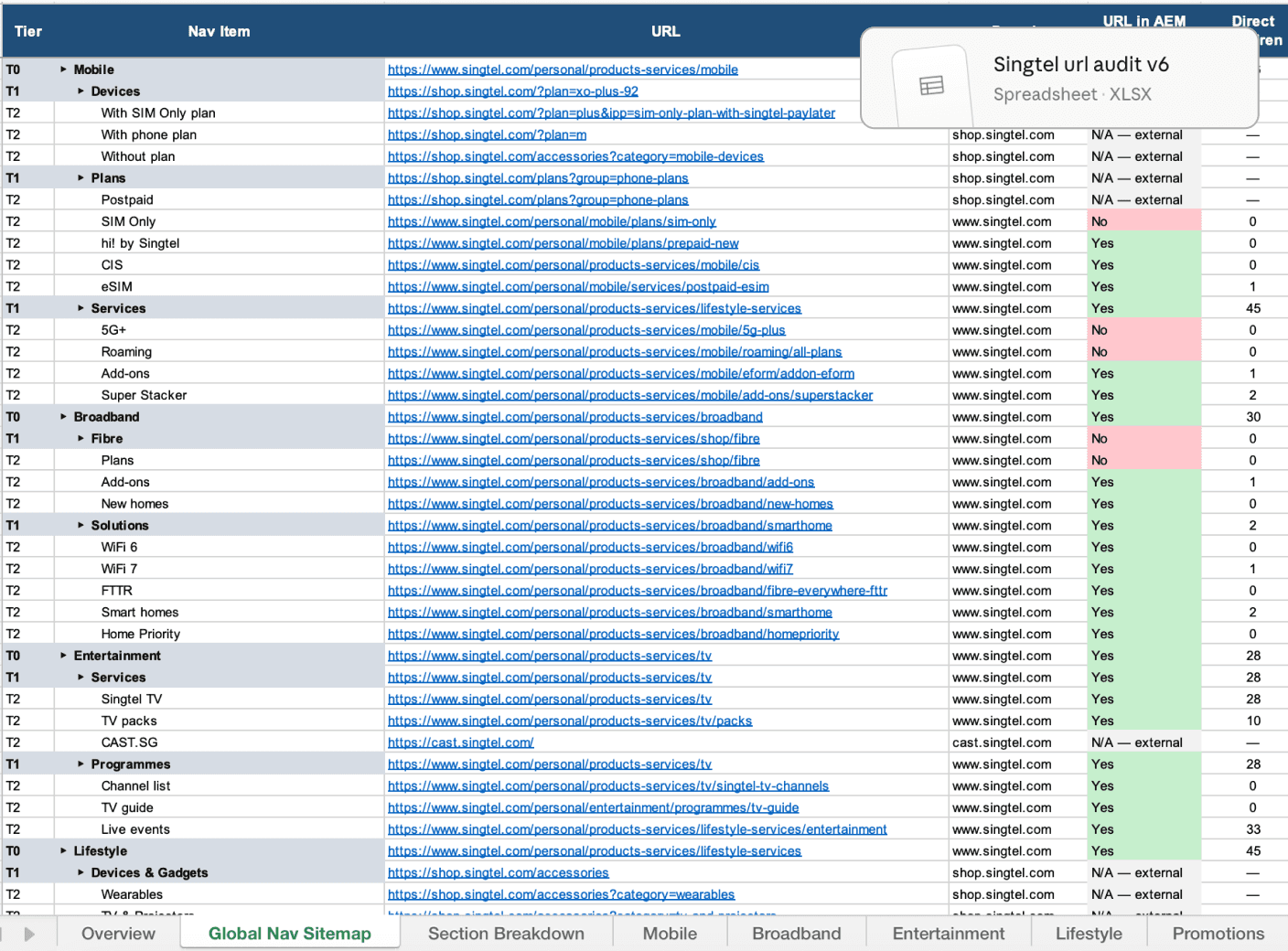
Used Claude to sort our sitemap and repository of URLs as part of a migration exercise. I worked through 6 spreadsheet iterations to get to a set of data I was satisfied with.
Stakeholder management as part of design
I treat stakeholder alignment as part of the design process itself. I’ve learned how critical it is to present a clear rationale, to know when to advocate or adapt, and to make impact of decisions clear to non-design stakeholders.
How this looks in practice: Running alignment sessions, documenting decisions and open questions, using language suited to the stakeholder’s function, and presenting design options with weighed risks.
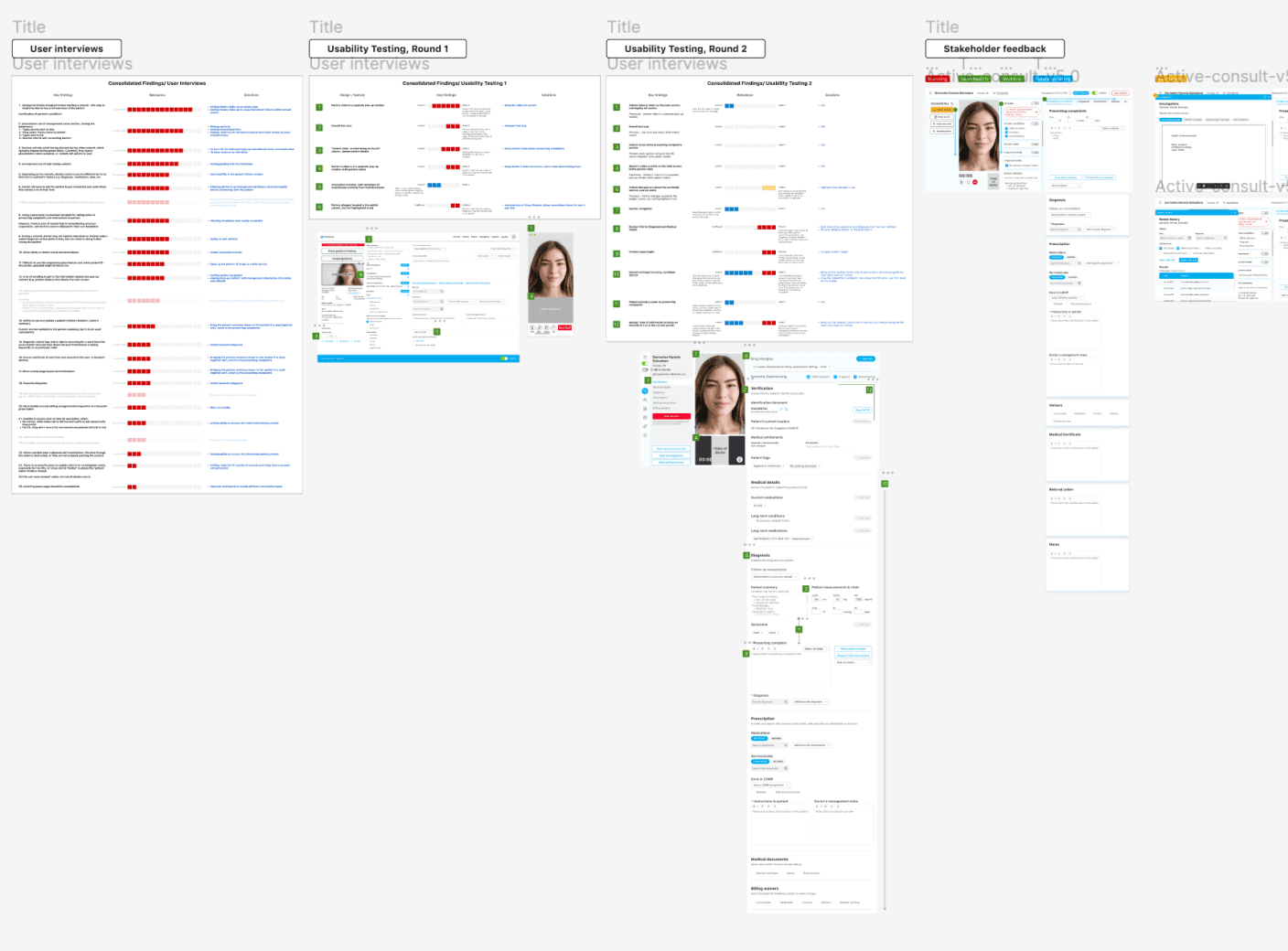
Taking management through the evolution of the design process helped them understand the rationale of the final outcome for the Doctors Dashboard.
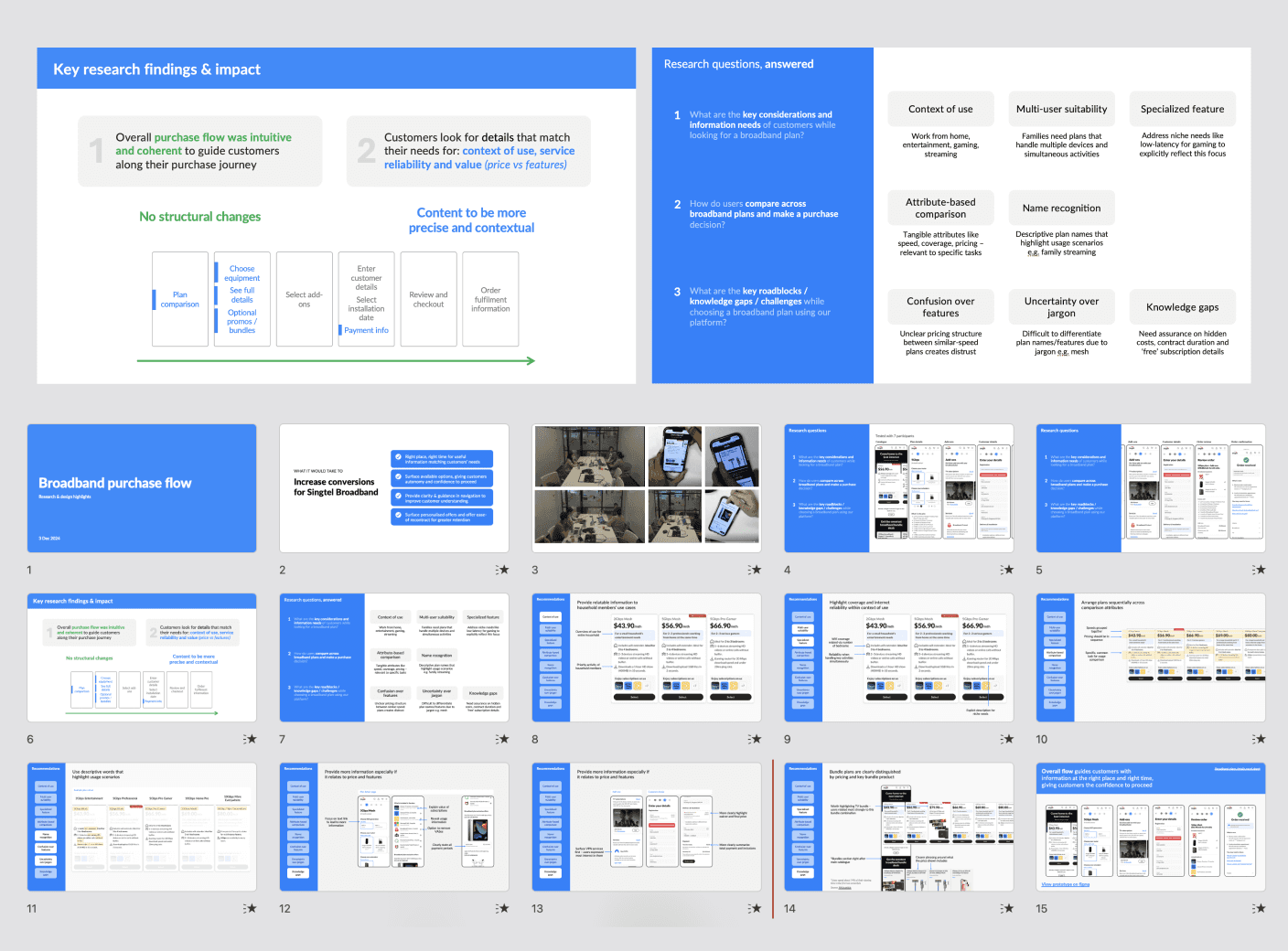
Breaking down our findings on the broadband purchase journey into a format suitable for the product marketing team stakeholders.
What I'm still figuring out
I'm still developing how to better measure design impact that leads to outcomes that actually reflect user and business value. And I'm actively exploring how AI can go further in my workflow, particularly in research synthesis and design documentation.